
Secure Development with Python Plugin
The Manifest Notebook Plugin enables teams to integrate AI risk management directly into their existing workflows. By installing Manifest's MAIS plugin, every cell in your notebook is automatically scanned before execution, ensuring compliance with AI governance policies and providing real-time visibility into model usage. This helps organizations manage risk, enforce security standards, and maintain continuous compliance without disrupting development.
To use the plugin in a Google Colab notebook or a Databricks notebook, follow the steps below:
-
Install the plugin.
pip install -U mais -
Create a new Manifest API Token for MAIS. This links the notebook to your Manifest account for policy enforcement and model tracking.
-
Navigate to Settings > API Tokens. This can be found under the section "Account":
-
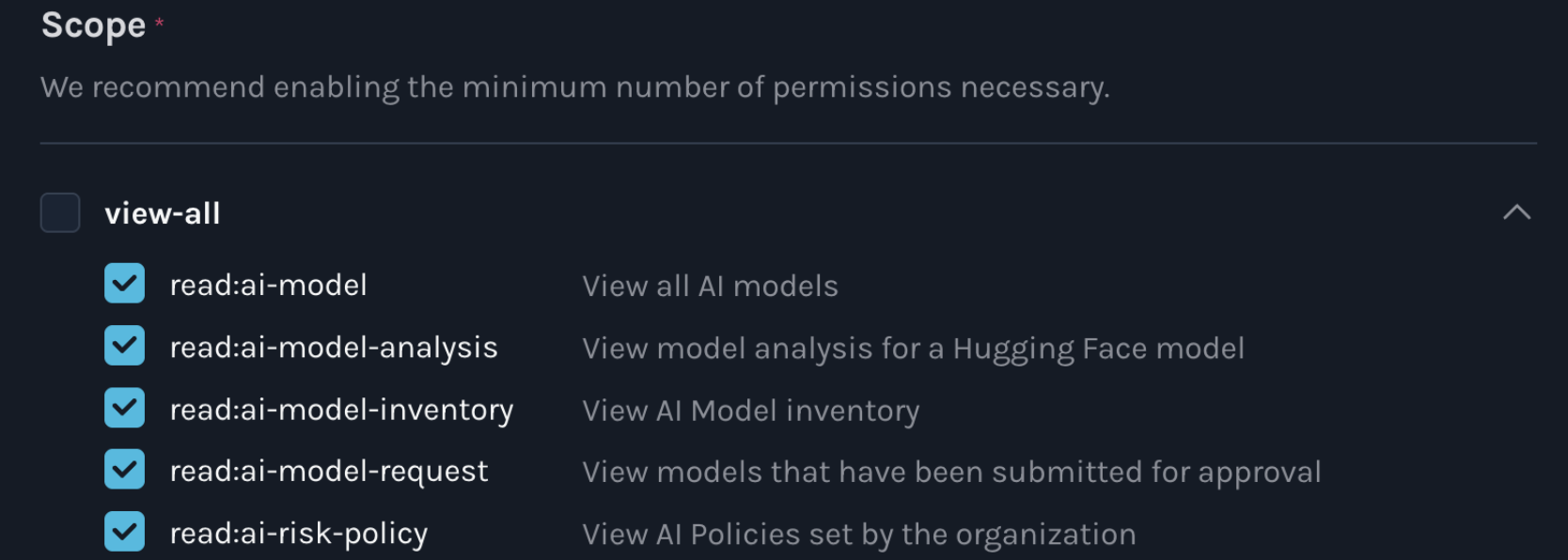
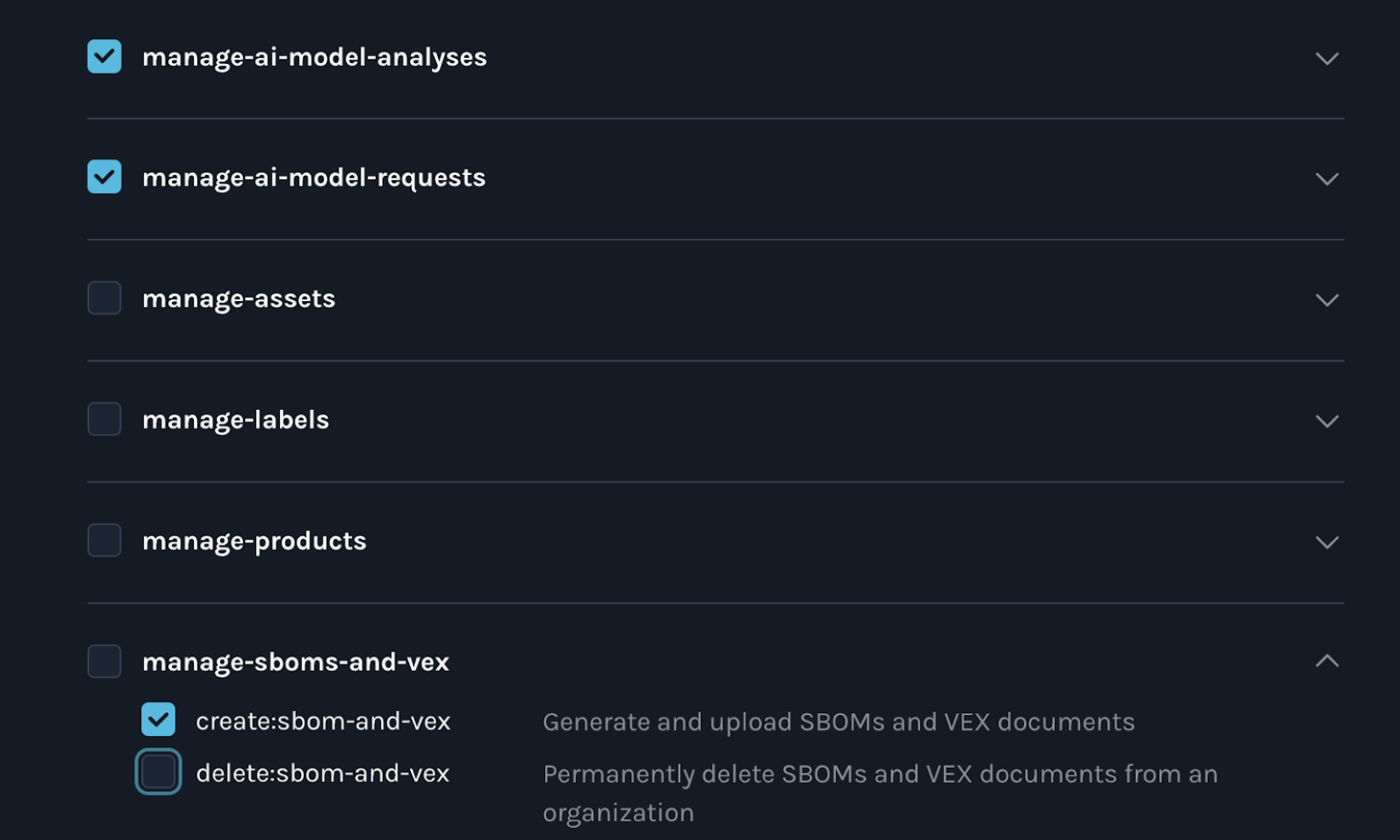
Create a token with at least the following scopes
-
-
In Google Colab, add your Manifest API key.
-
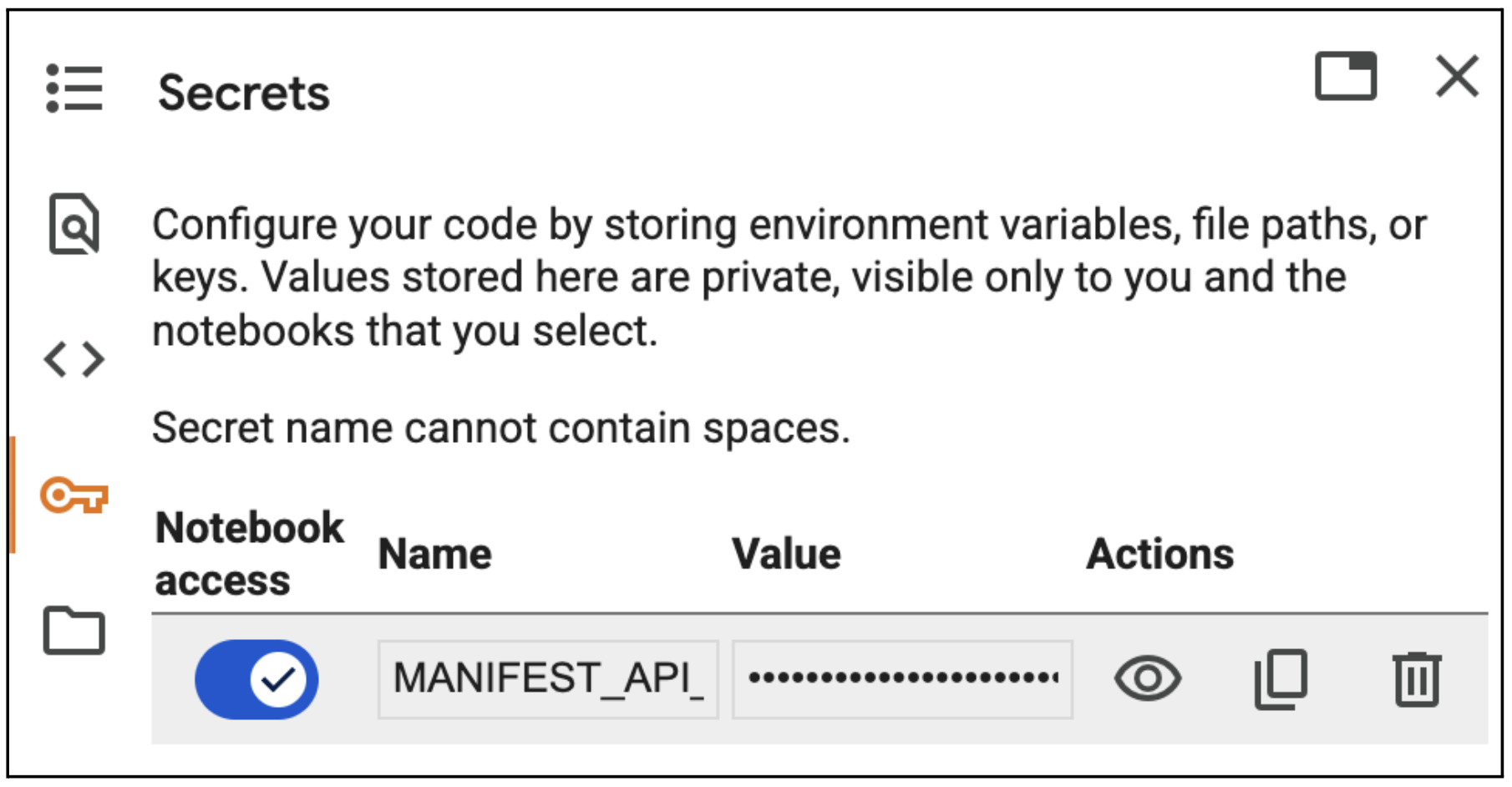
Add your MANIFEST_API_KEY as a Google Colab secret
-
Assign your secret to the api_token variable.
``python
api_token = userdata.get('MANIFEST_API_KEY')
``
-
-
In Databricks, add your Manifest API key
- Ensure your Databricks environment has a secret scope and key configured with Manifest API Key as a value: https://docs.databricks.com/aws/en/security/secrets/?language=Secrets%C2%A0utility%C2%A0%28dbutils.secrets%29#create-a-secret
- Assign your secret to the api_token variable:
api_token = dbutils.secrets.get(scope="mais", key="api-token")
-
Import and initialize the plugin. After successful initialization, MAIS will scan and analyze every cell before its execution, separately.
from mais import MAIS
m = MAIS(api_token=api_token)
To enable debug-level logging during initialization, pass
verbosity="DEBUG". This is useful for troubleshooting detection issues or inspecting the calls MAIS makes to the Manifest API.from mais import MAIS m = MAIS(api_token=api_token, verbosity="DEBUG")
-
Register your custom model to your Manifest inventory using the
register_modelfunction. All parameters are required: model name, model version, supplier, and country.m.register_model("model_name", "model_version", "supplier", "country")For example:
m.register_model("my_custom_model", "1.0", "Acme", "USA") -
Generate the SBOM. This will automatically generate an AI Bill of Materials (AIBOM) showing all model dependencies and risks.
m.create_sbom()Your Manifest dashboard will now show the new model with complete risk analysis, compliance status, and security documentation - demonstrating full AI governance in action.
Direct Python Usage
MAIS isn't limited to Jupyter — you can use it directly from any Python script, CI job, or service. Instantiating MAIS() outside of a notebook automatically installs script-mode hooks that mirror the per-cell behavior you get in Jupyter:
- One-shot scan of your entry script (
__main__) at construction time. - Per-module import hook (
sys.meta_pathfinder) that analyzes the source of each first-party module you import before it executes. Stdlib andsite-packagesmodules are skipped automatically — only your user code is scanned.
from mais import MAIS

# Instantiating MAIS in a regular script automatically:
#   1. Reads and analyzes the running script's source.
#   2. Installs an import hook so every user module you import next
#      gets analyzed before it runs (just like a Jupyter cell).
m = MAIS(api_token="<manifest-api-token>", verbosity="DEBUG")

from transformers import AutoTokenizer
tokenizer = AutoTokenizer.from_pretrained("moonshotai/Kimi-K2-Instruct")

from datasets import load_dataset
dataset = load_dataset("ProlificAI/social-reasoning-rlhf")

# Methods like register_model() and create_sbom() work without any
# extra plumbing — MAIS uses the cached script source automatically.
m.register_model("my_custom_model", "1.0", "Acme", "USA")
m.create_sbom(path=".", publish=False)

# Need to detach the import hook (e.g. in tests)?
m.uninstall()
Expected output (truncated):
MAIS [DEBUG]: Found dataset loading call: load_dataset('ProlificAI/social-reasoning-rlhf')
MAIS [DEBUG]: Datasets found: [{'title': 'ProlificAI/social-reasoning-rlhf', ...}]
MAIS [DEBUG]: Custom model registration → POST https://api.manifestcyber.com/v1/model-analysis/custom
MAIS [DEBUG]: Model '<id>' registered successfully
✅ SBOM Created — sbom.json written at .
Example
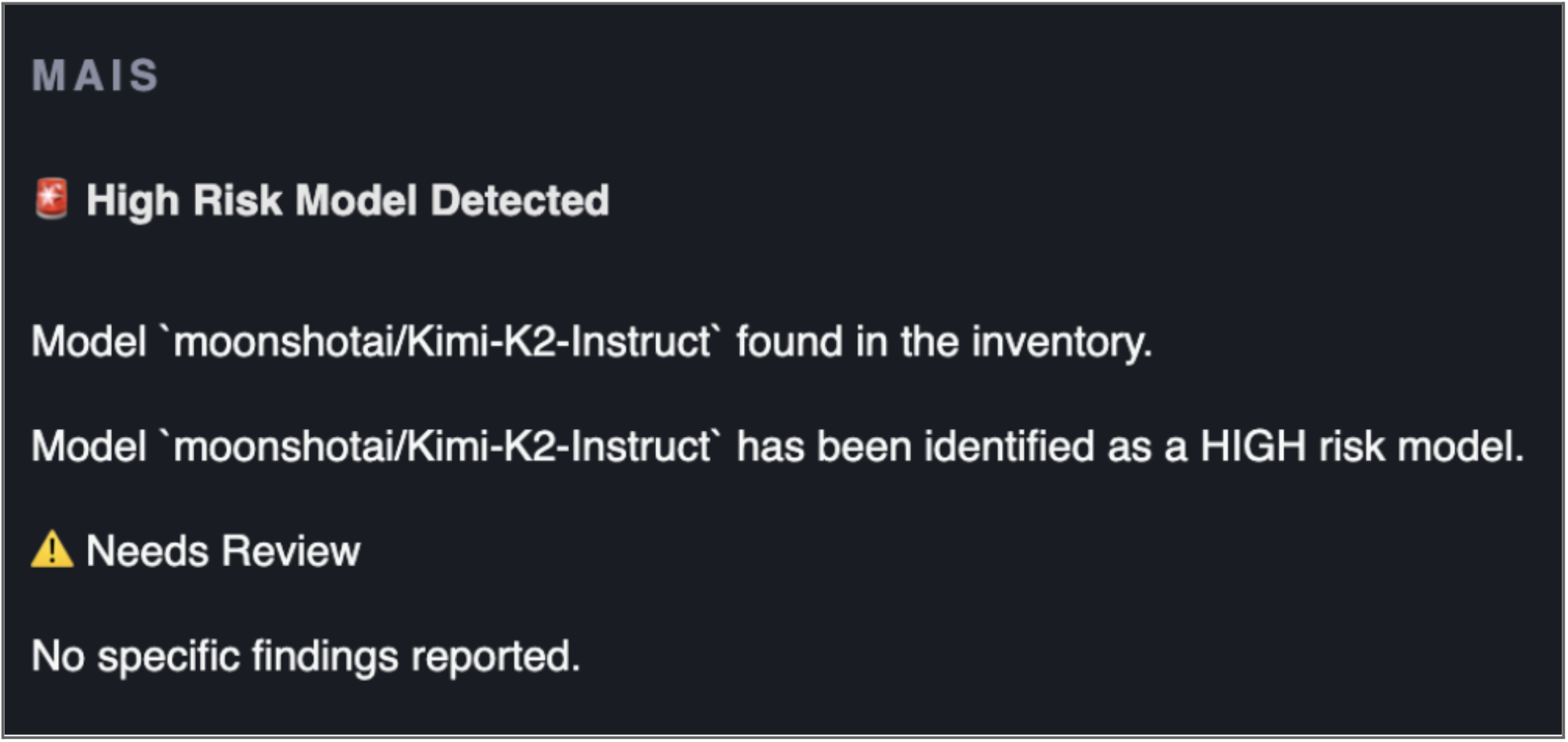
Example #1: Risk assessment of a model registered in your organization’s inventory

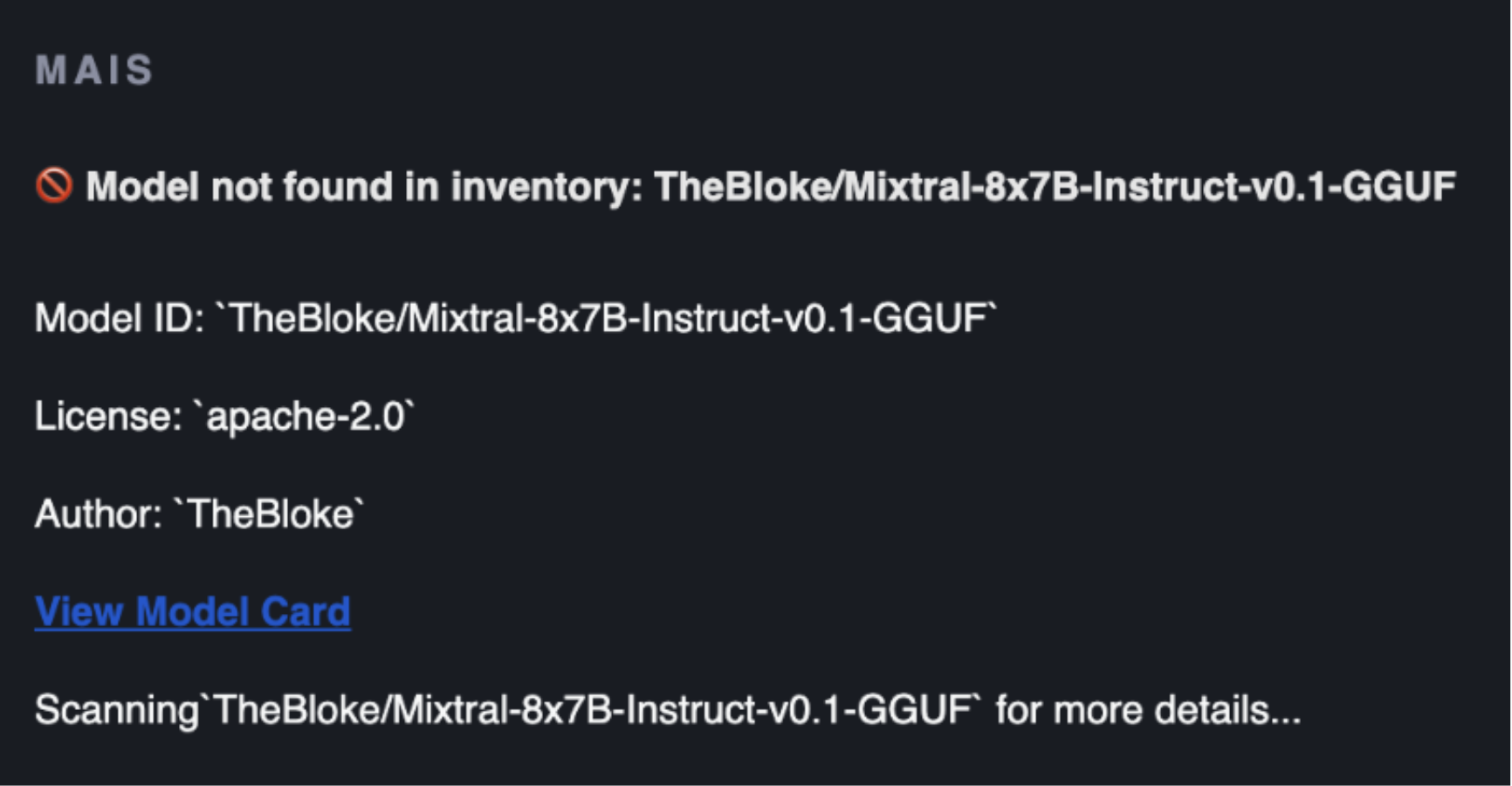
Example #2: Risk Assessment of model not found in inventory

Updated 4 months ago